
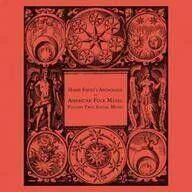
Description
The importance of Harry Smiths work can not be overstated. Not only did he single-handedly save much of American folk music from extinction, but when he handed his record collection over to Smithsonian folkways in 1952, he opened the floodgates for the American folk revival of the following decade.
Not since John and Alan Lomax had anyone paid so much attention to saving the American folk song from extinction, but unlike the Lomaxes, Smith was not a government worker armed with a tape recorder, he was just a guy from Portland, Oregon armed with a love of music and an insatiable curiosity. So, when the U.S. Armed Forces began melting down old records to be used as shellac during WWII, Smith kicked into high gear, buying up as many old 78s from the 20s and 30s as he could find. Much of the music found here then comes from a time before televisionarm-in-arm with rock & rollbegan beaming its über-culture into every household in America, erasing much of what had grown up locally. Prior to WWII, America was in many ways no more than a patchwork of territories, with distinct local cultures and musical traditions reaching both far into the immigrant past of each areas inhabitants, but also into a future firmly rooted in the newness and adventure of life on this new continent.
And the social music that grew up in this time period was both social in the sense of social gathering (barn dances, religious gatherings, etc.), but also in the sense of social issues (labor rights, migration, money troubles, etc.). Their music was, therefore, a reflection of their lives, serving both as respite from their troubles (these were desperate times: the dust bowl, the depression, tenement housing, sweat shops, etc., were all part of the these peoples everyday lives), but also as a vehicle for their discontent.

Reviews
There are no reviews yet.